

The Global Journey of Crystals: Exploring Their Path from Earth to Collector's Hands
Crystals exist in almost every part of the world, formed slowly beneath the Earth’s surface under intense heat, pressure, and shifting mineral conditions. What we see in collections today is the result of millions of years of geological change, followed by careful extraction and selection. At Powers Gems, we think of each stone as something that already had a life long before it was ever seen; shaped by a specific place, environment, and set of conditions that can never quite be repeated.
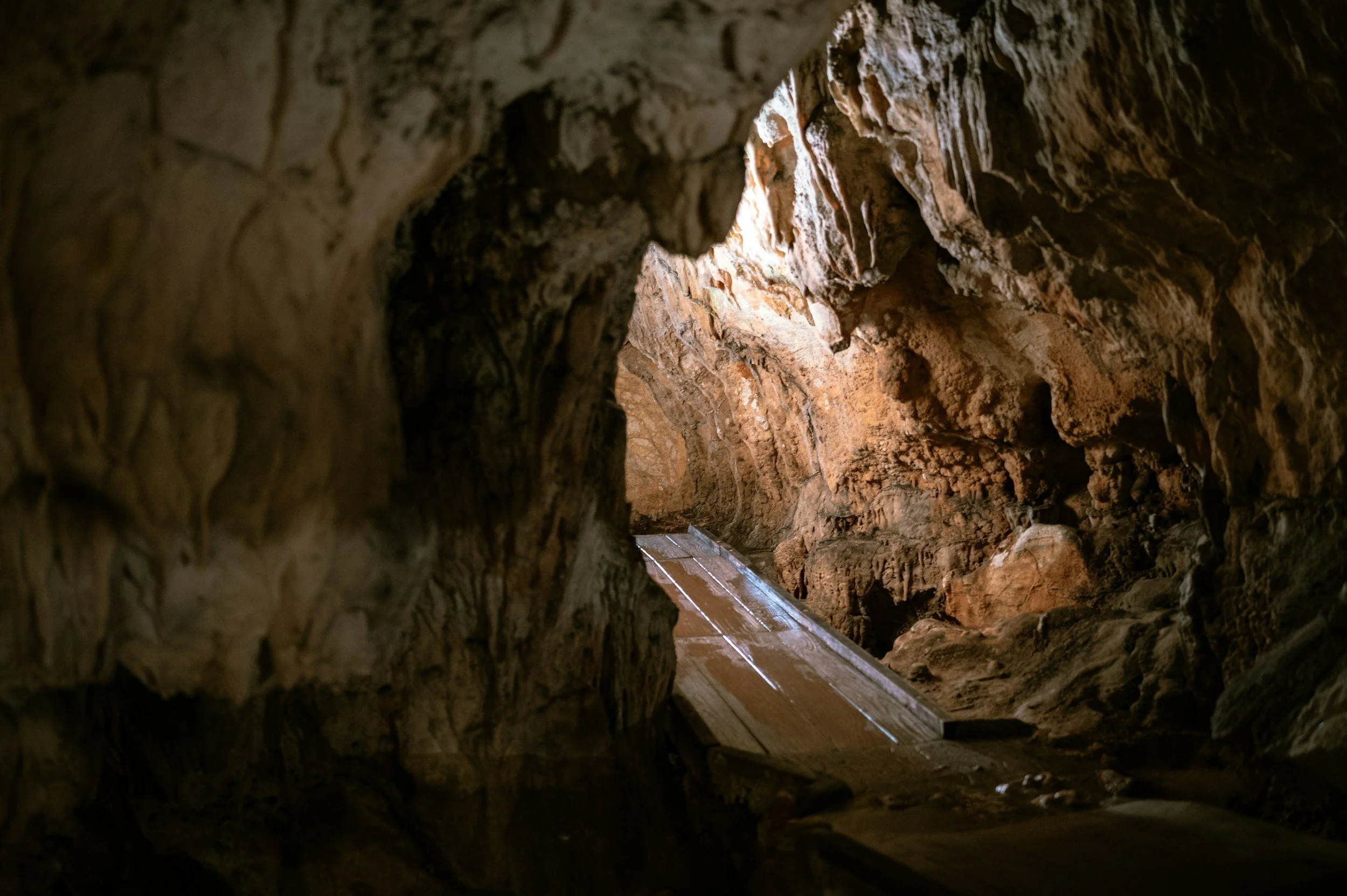
A natural cave interior carved over time by geological forces, with mineral-rich rock formations exposed along the walls and floor. Light filters into the space, revealing textured layers, subtle color variations, and areas where crystal deposits are visible within the stone. The scene reflects the raw environment where gemstones form and are discovered, untouched except for the natural processes that shaped it over millions of years.
Where Crystals Are Found Around the World
Certain regions are known for producing distinct materials, often because of their unique geology.
- In Brazil, large deposits of quartz and amethyst are found in volcanic rock formations. Some of the most recognizable geodes come from this region, formed slowly as minerals lined hollow cavities in stone.
- Madagascar produces a wide variety of minerals, including labradorite and rose quartz. Many deposits are located in remote areas, where mining is still done in small, local operations rather than large industrial sites.
- In the Himalayan regions of Pakistan, quartz and aquamarine are often found in high-altitude pegmatite veins. The terrain is extremely difficult, which means many of these crystals are still extracted by hand in challenging conditions.
- Afghanistan is historically known for lapis lazuli, a deep blue stone that has been mined for thousands of years. Some of the oldest known gemstone trade routes were built around this material.
- In the United States, Arkansas quartz is especially well known for its clarity. These crystals form in conditions that allow for unusually transparent structures compared to many other sources.
Mining Practices: How Crystals Are Extracted
There isn’t one single way crystals are extracted; it depends entirely on where they form. In many places, mining is still small-scale and manual. Workers use basic tools to carefully remove surrounding rock, especially when crystals form in delicate clusters. This method is slower, but it helps preserve the integrity of more fragile specimens. In other regions, open-pit mining is used. Layers of earth are removed to reach mineral-rich zones below. Once exposed, crystals are sorted by hand and separated based on quality and structure. Some stones are collected through riverbeds and natural erosion, where water movement has already freed them from their original rock. These are sifted out of sediment and gravel.
What Makes Certain Crystals Rare or Difficult to Find
Rarity isn’t just about appearance; it often comes down to how unlikely the conditions are for a crystal to form in the first place.
- Stones like painite were once thought to be nearly impossible to find in meaningful quantities. Even now, high-quality specimens remain extremely limited.
- Alexandrite is another example. While it exists in several locations, strong color-changing pieces with good clarity are uncommon
- Even more accessible stones like tourmaline or aquamarine can become rare at higher qualities, especially when color, structure, and clarity align in a single specimen.
In many cases, the more visually perfect a crystal is, the less often it naturally occurs.
From Earth to Finished Stone: How Crystals Are Processed
Once extracted, crystals go through a quiet but important process before they ever reach a collection. They are first cleaned and sorted, often still covered in clay, iron staining, or surrounding rock. From there, they are separated based on quality, and collector-grade material is identified early. Some stones are left completely raw. Others may be lightly cleaned or polished to better reveal internal structure, but heavy alteration is generally avoided in higher-end pieces. At the final stage, only a small portion of the material is selected. Most of what is mined never becomes part of a curated collection.
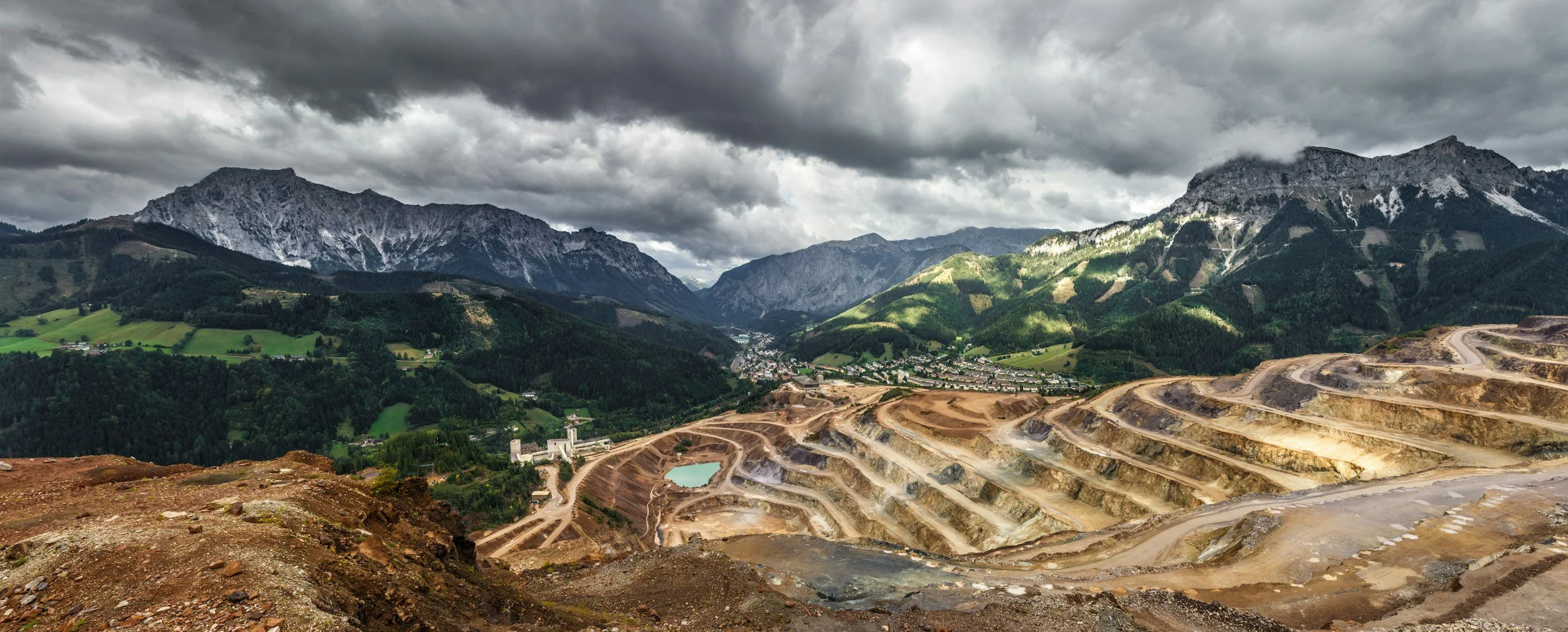
A high-altitude mountain mining site set across rugged, exposed terrain. The landscape stretches along the ridge, where mineral-rich rock formations are visible at the surface of the mountainside. The open environment emphasizes the scale and isolation of the location, with steep slopes and weathered earth shaped by natural forces over time. It reflects the remote conditions where crystals and minerals are uncovered directly from the earth at an elevation far above developed ground.
The Stories Behind the Stones
Across cultures, crystals have carried meaning long before modern gemology existed. In ancient Egypt, stones like lapis lazuli were used in jewelry and burial objects. In early Greek tradition, quartz was believed to be permanently frozen ice. In Chinese history, jade became associated with balance and integrity, often valued more for meaning than appearance. Even today, many of these stories still follow the stones themselves—not as fact, but as part of their cultural history.
A Collection That Starts With the Earth
What makes a crystal meaningful is not just how it looks, but where it comes from and how it was formed. Every piece represents a moment in geological time that cannot be repeated. A specific set of conditions, preserved in stone, carried across distance, and eventually selected by hand. At Powers Gems, that’s where each collection begins; not with volume, but with attention.